
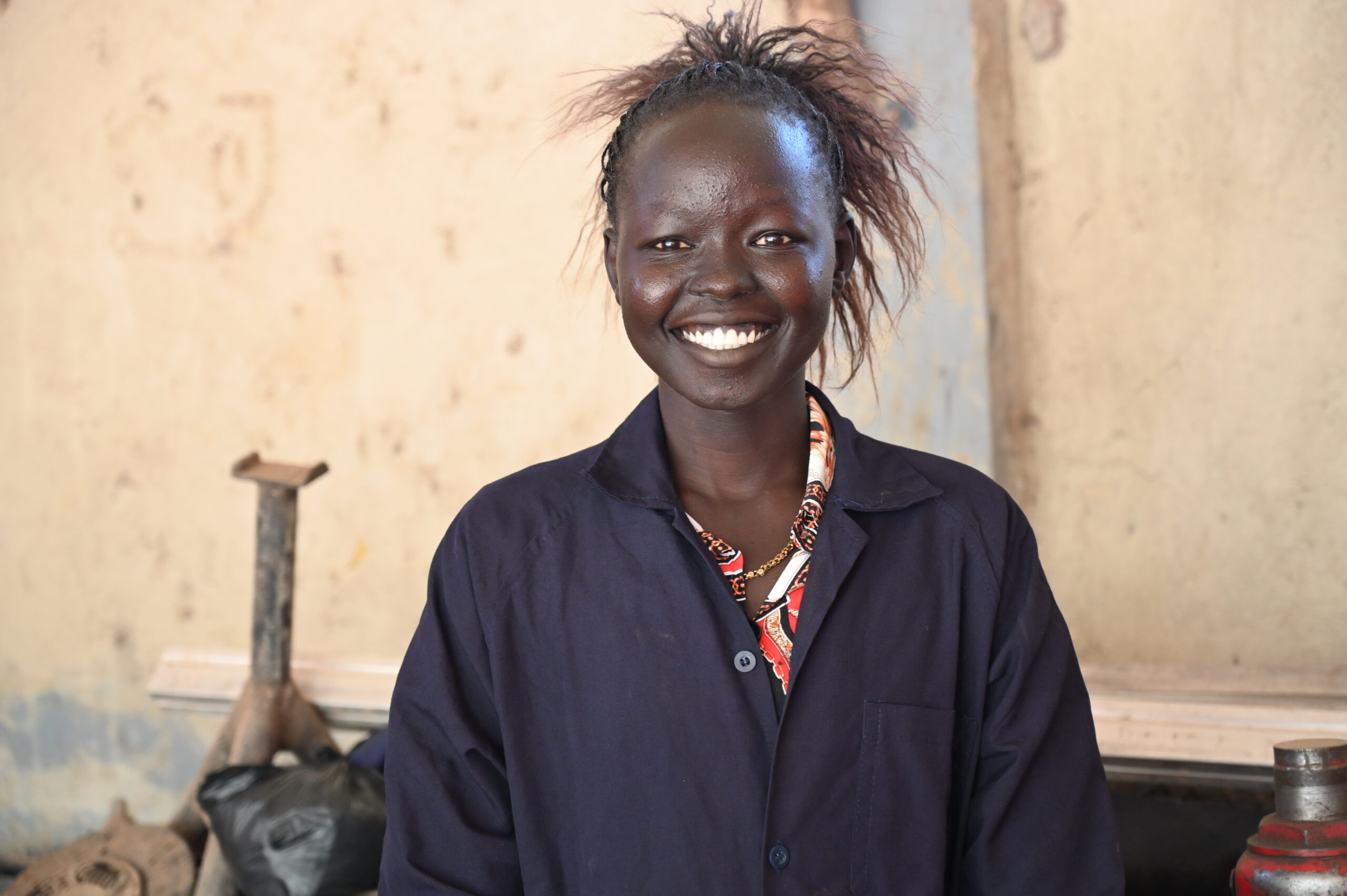
When Martha Kockedhia Dut speaks, she does so with a calm strength that hides the storms she has survived.
At just 25, she has lived through more upheaval than most people experience in a lifetime. Yet, today she stands proudly in her city as one of the few young women breaking barriers in mechanics and driving — a field dominated almost entirely by men.
Her journey began in Rumbek, South Sudan, where she grew up with her parents and three siblings. Life was simple then. Her father, a builder, worked hard to provide for the family.
But at 8 years-old, everything changed as her father suffered a serious accident — a fall that broke his back and left him unable to work or care for his children. Soon Martha and her siblings lived with a cousin, but school became expensive and they struggled to attend.
While her cousin’s children studied, Martha and her siblings remained at home, doing chores and waiting for a chance that never came.
The family faced further challenges when they were once again forced to flee South Sudan for Kenya, living as urban refugees before moving to Kakuma Refugee Camp. Their time there was brief, and the family including her siblings later returned to South Sudan, leaving Martha alone in Kakuma.
Martha was just a child, yet already accustomed to instability pulled from pillar to post.
Education empowering women
But Kakuma gave her something she had not had in years: school.
“I repeated Class 2 three times,” she laughs softly. “First in Rumbek, then in Nairobi because I didn’t know Kiswahili, and again in Kakuma. But at least I was studying.”
All of this time she had stayed with a kind guardian who treated her with dignity — a rare blessing in her turbulent childhood. By 18, she completed primary education. But after that achievement, barriers rose again. Her uncle encouraged the girls to return to South Sudan for further studies. They did — only to be moved back and forth between Juba, Nairobi, and finally Rumbek, following their uncle’s marital conflicts and job struggles.
Sometimes she studied. Sometimes she stayed home for an entire year. Education was cruelly just beyond her grasp.
When her cousin refused to support her secondary exams, she didn’t stop. She found a school registering candidates for free, sat for her national exams, and passed – Martha was searching for what she truly wanted: a career in mechanics and driving.
In 2024, things finally shifted. Friends told her about a course encouraging girls to apply — a Basic Mechanics and Driving program at St. Peter Claver Ecological and Computer Centre run by Jesuits.
Martha’s heart immediately knew she belonged there.
She worked in a pharmacy, saved money, paid her own tuition, and enrolled.
“I was one of only three girls out of 32 students,” she says. “People kept telling me mechanics is for men. They discouraged me so much. But I told myself, ‘Nothing is too hard in this world.’”
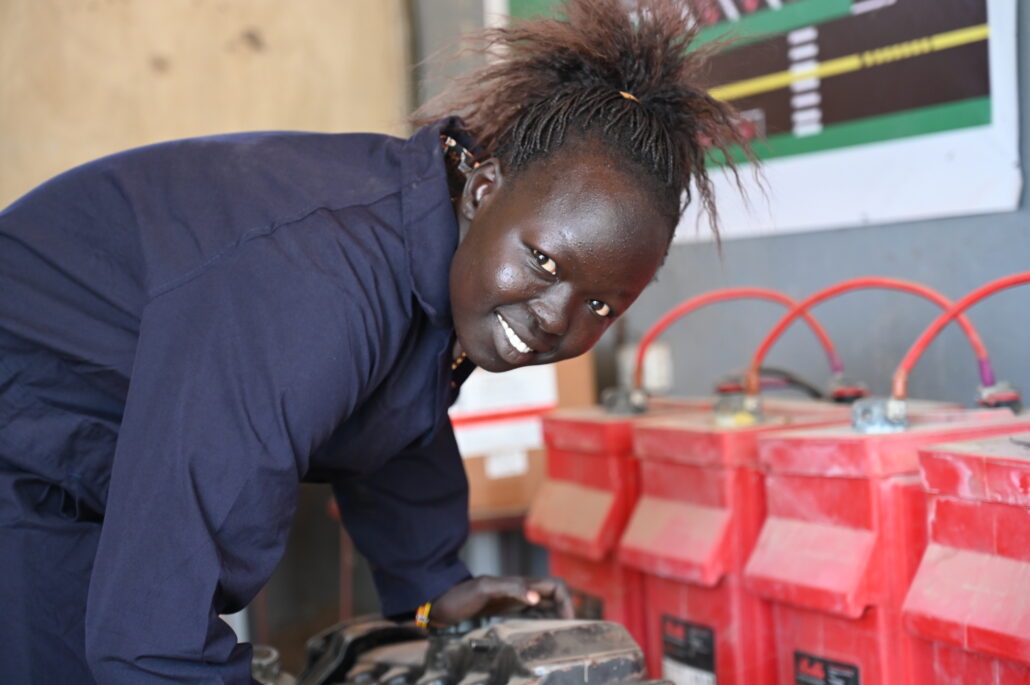
 For four months, she trained relentlessly. She learned tools, engines, repair skills, and driving techniques. And when she graduated, the Centre selected her for an internship — proof of her talent and determination.
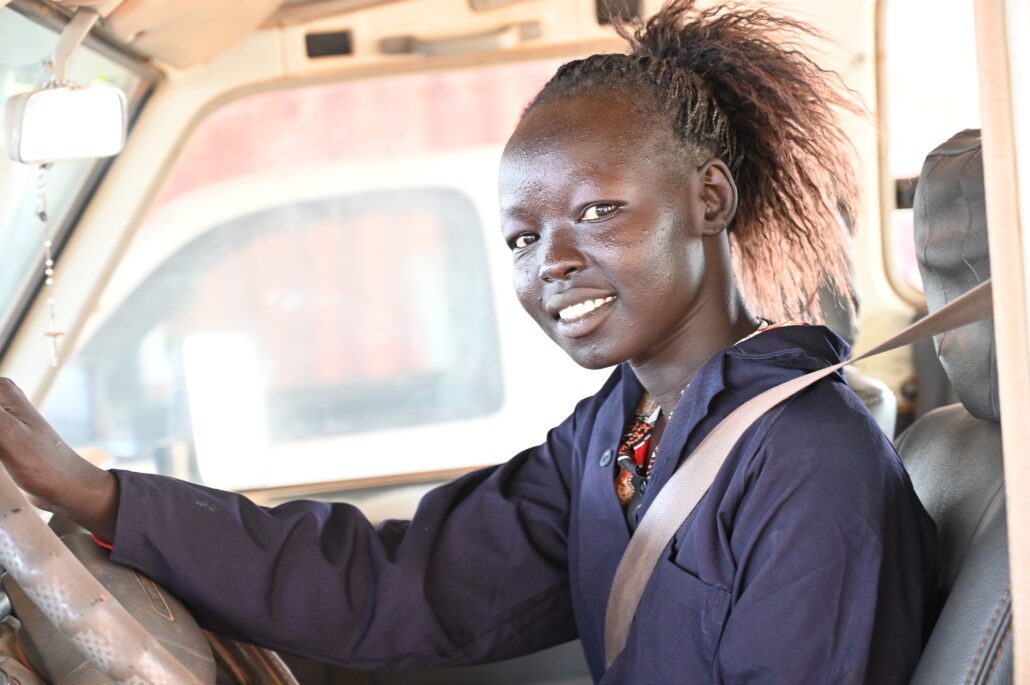
Today, Martha can repair various parts of a vehicle. She drives confidently along the busy markets of Rumbek, turning heads and inspiring whispers:
“Look! A lady is driving. South Sudanese girls are rising!”
She smiles whenever she hears those words.
She has now returned to education to improve her national exam average so she can pursue a diploma in mechanics — a dream she refuses to abandon.
“Nothing is too hard in this world. Everything needs commitment. Girls can do anything — just give us a chance! We are the eyes of this country!”
Her message to the donors who funded the Centre is filled with gratitude:
“If it wasn’t for you, I wouldn’t be here sharing my story today. What you are doing is not helping me alone but the whole community.”
Martha’s story is not just her own. It is the story of every girl who has been told “you cannot,” every child who has been left behind, and every refugee who still dreams.
She is proof that resilience grows even in the harshest places — and that when you give one girl a chance, you change an entire generation.
For International Women’s Day find out more about how we are empowering women and girls to overcome incredible challenges, Click: www.iji.ie/education