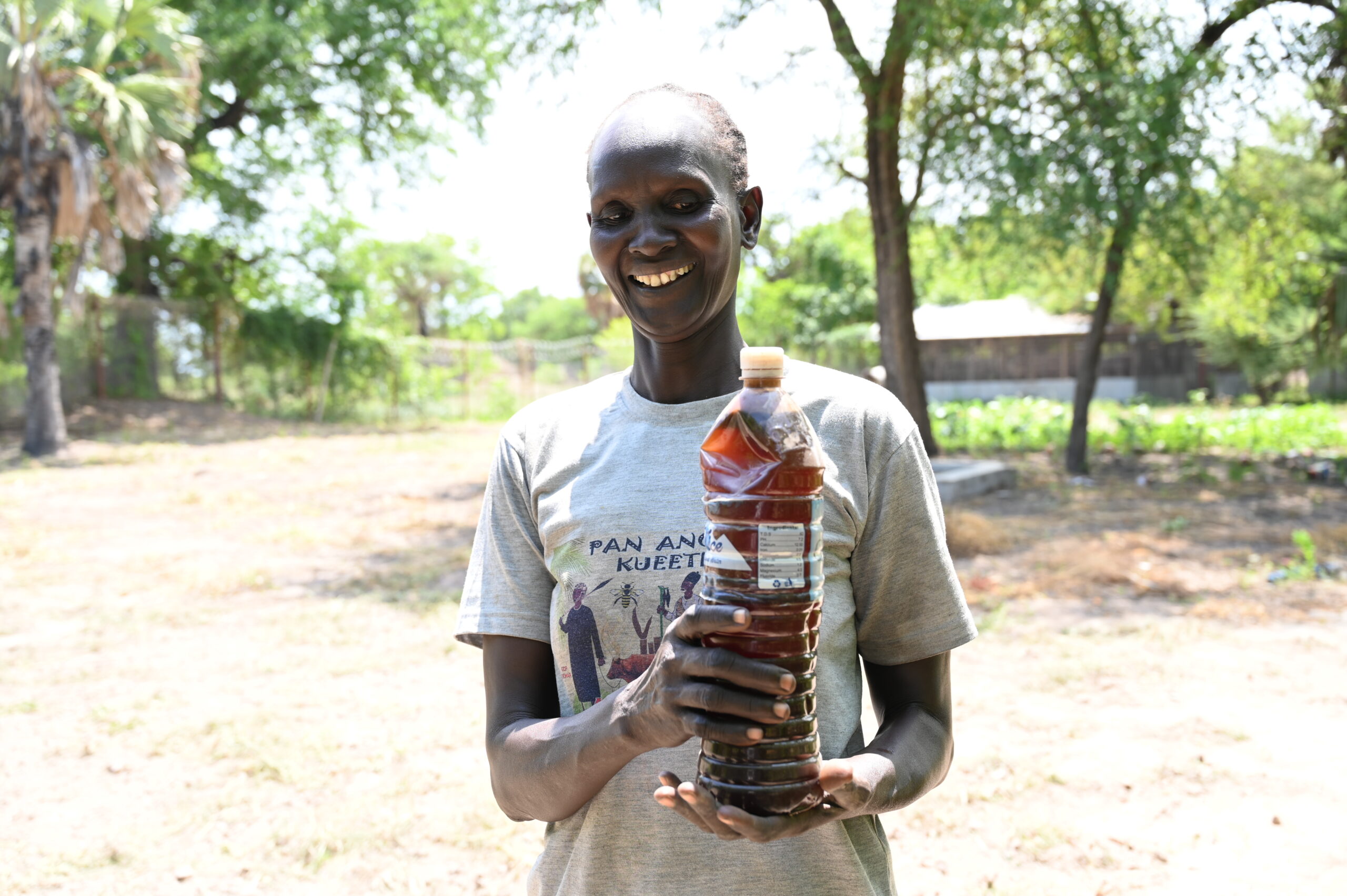
In a remote village about 12km from Rumbek town in South Sudan lives Mary Awal Deng, a widow in her late thirties and mother of five children — four girls and one boy.
Like many women in rural communities, Mary has faced years of hardship, loss, and difficult cultural realities.
Yet today, through beekeeping and honey farming, she is slowly rebuilding hope for herself and her children.
Last year, 41 women were trained in beekeeping and other livelihood skills through the Multi-educational and Agricultural Jesuit Institute of South Sudan (MAJIS) agriculture and livelihood program.
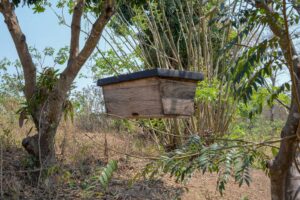
Each woman received a beehive to install near her home, while six additional beehives were installed at the MAJIS training site for practical learning and honey production. You can find out more about MAJIS, here.
For Mary, the training came at a time when she was struggling to survive.
After the death of her husband several years ago, Mary was inherited by her late husband’s elder son from another wife, a practice still common in some Dinka communities.
Reflecting on her life, Mary speaks quietly but painfully about the experience and the challenges faced by women and girls.
“Women become the property of the family,” she says softly. “I was not happy when my two girls were forced into marriage at a very young age.”
Two of Mary’s daughters were married at the ages of 16 and 17. Today, she remains with her two younger daughters, aged 8 and 11, while her only son continues to attend school.
Mary dreams of a different future for her younger girls.
“I want my daughters to go to school, grow well, and choose responsible men who can take care of them,” she says. “I do not want them to suffer the way I suffered.”
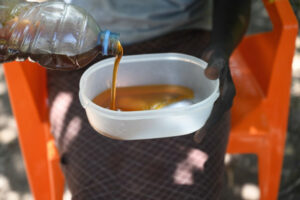 Through the beekeeping training, Mary learned how to care for bees, harvest honey safely, and help boost sales at the market.
She received one beehive, which she installed near her home.
Today, that single beehive has become one of the family’s main sources of survival.
Mary harvests honey twice a year, collecting about five litres during each harvest. She sells one litre of honey for approximately 15,000 South Sudanese Pounds — that’s around 3 US dollars.
“The bees are not only giving me honey,” Mary explains with a smile. “They have become the source of my income. They have saved me and my children.”
From the income she earns, Mary supports her children including the school expenses for her son. Last year alone, she managed to save nearly 1,000,000 South Sudanese Pounds from honey production — approximately 200 US dollars.
“If I get one more beehive, my harvest will double,” she says proudly. “The bees are increasing every year, but they need more hives where they can stay and grow.”
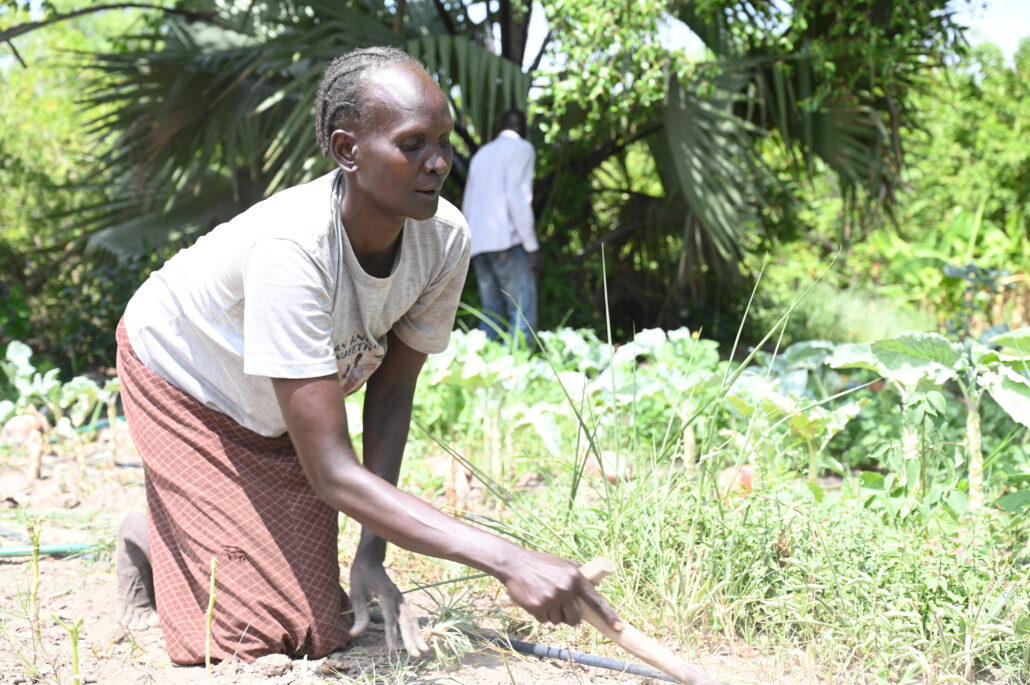
In addition to beekeeping, Mary also practices vegetable farming during the rainy season using the agricultural skills and seeds she received through trainings. She occasionally works at the MAJIS farm to earn extra income for her family.
“The Jesuits are generous to give us this opportunity,” Mary says. “The training, the seeds, and the beehive changed my life! I thank God for the people who help others and give vulnerable women hope!”
As the world celebrates International Bee Day, Mary’s story reminds us that bees are more than producers of honey.
In vulnerable communities like hers, they are helping women survive, support their children, and build a better future through dignity, resilience, and hard work.
For Mary and many other women in rural South Sudan, beekeeping is not only about honey — it is about hope and building a brighter future for their children.
For World Bee Day, do something amazing and gift a beehive to empower more women like Mary
Visit: www.iji.ie/gifts